
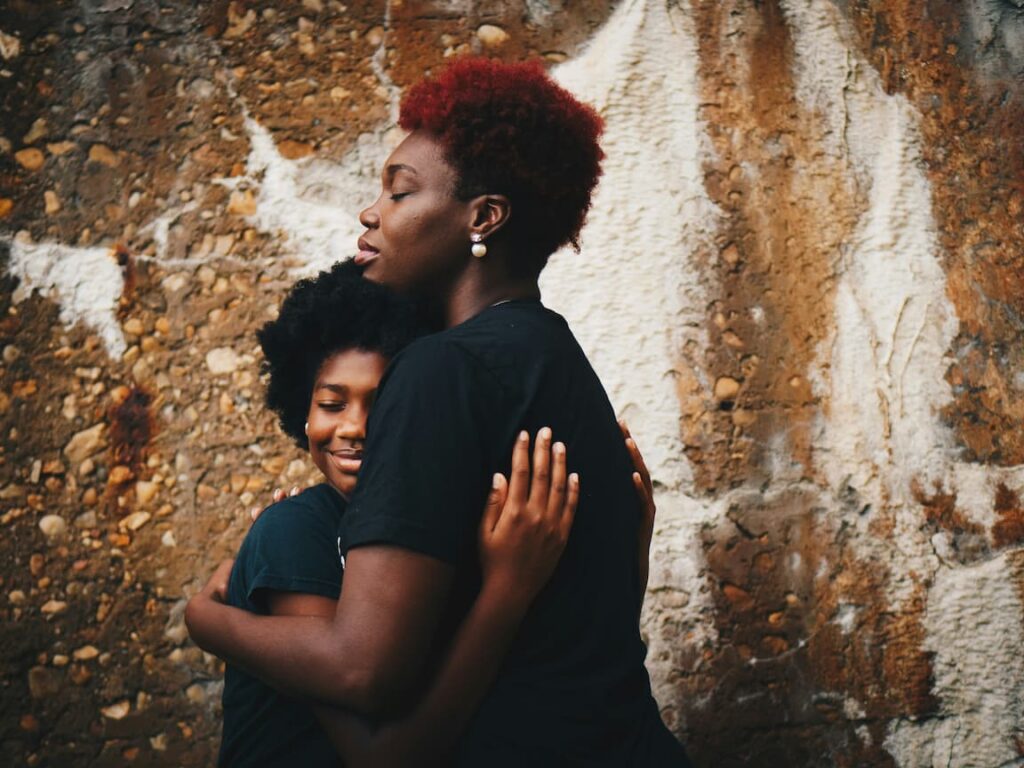
This post was written by team member, Sally King.
After my son told me he was gay, I thought the big moment had happened.
Not that everything was finished, exactly. I’m not that naïve. But in my head, the dramatic part was him telling me. The difficult sentence had been said. The couch conversation had happened. I had hugged him. I had told him I loved him. He had gone back to being a sniffly teenager under a blanket.
And life, in that strange way life does, carried on.
There was still dinner to make. There were still school forms to sign. There were still socks on the floor that apparently belonged to nobody.
But then came the next part.
The part I had not really thought about.
Who else gets to know?
A few days later, someone in the family asked me casually, “So, is he seeing any girls these days?”
It was such a normal question. The kind of question people ask about teenagers without thinking very much. A little nosy, a little loving, a little annoying.
And suddenly I felt myself pause.
Because I knew something now. Something that wasn’t yet mine to share.
That was the moment I realised that when your child comes out to you, you are not just being trusted with information. You are being trusted with something delicate.
Not shameful. Not bad. Not something to hide away. But delicate.
There is a difference.
I didn’t want to act like it was a secret in the heavy, dark way. I didn’t want my son to feel like I was embarrassed or that we had to whisper about him. The last thing I wanted was for him to think I saw this as some terrible family problem.
But I also knew this was his story before it was mine.
That sounds obvious now, but at the time I had to actually think it through.
Because mothers talk. Oh, do we talk!
We talk to sisters and friends and our own mothers and people at work and other parents at school. Sometimes we talk because we need advice. Sometimes because we are worried. Sometimes because we are proud. Sometimes because we simply cannot hold a big feeling inside our own body without letting a little of it leak out somewhere.
And I had big feelings.
Not bad feelings. But big ones.
I was proud that he had told me. I was relieved he had not kept it from me forever. I was worried about whether he was okay. I was worried about whether other people would be kind. I was worried about saying the wrong thing. I was worried about not saying enough. I was worried in that very specific mother way where your brain builds twenty-seven possible futures before you have even finished making tea.
But my need to process it did not automatically give me permission to process it with everyone.
So I did something that was, for me, quite advanced parenting. I stayed quiet and asked him.
Not immediately. I gave it a little time. Then one evening, when things were calm and nobody was ill or rushing or pretending to do homework while actually watching videos, I said, “Can I ask you something?”
He looked suspicious, as teenagers do when a parent says this.
“Depends,” he said.
Fair.
“I just want to know what you want me to say if people ask about you. About dating. Or girls. Or anything like that.”
He was quiet for a second.
I tried very hard not to fill the silence. Again, not one of my natural talents.
“I don’t know,” he said eventually.
Which, of course, was a perfectly reasonable answer. He was fifteen. I was asking him to come up with a communications strategy for his entire extended family. Most adults would need a meeting and a spreadsheet.
So I asked it a different way.
“Who knows already?”
“A few friends.”
“Do you want anyone else to know?”
“Not really. Not yet.”
“Okay,” I said. “Then I won’t tell anyone.”
He looked at me then. Properly looked.
“Not even Grandma?”
“Not even Grandma. Not yet. Not until you’re ready.”
This was not a small promise, by the way. Grandmothers are powerful information systems. They ask questions. They notice things. They remember details you forgot you ever said. They can detect a change in tone through a wall and across three time zones.
But still.
Not even Grandma.
Because it was not about who deserved to know. It was about who he was ready to tell.
That was harder than I expected.
Not because I wanted to gossip. I didn’t.
But because there were moments when not saying anything felt uncomfortable. Someone would make a comment about him “breaking girls’ hearts one day” and I would smile tightly and change the subject. Someone would ask if he had a girlfriend and I would say, “No, nothing like that at the moment,” and move on quickly before my face did something strange.
I hated feeling as if I were in the closet.
But I had to remind myself: I was not lying to protect a shameful secret.
I was holding a boundary to protect my child.
Those are not the same thing.
Eventually, he did start telling people. Not all at once. There was no announcement. No family email. No dramatic gathering where everyone sat in a circle while I handed out tissues and biscuits.
It happened bit by bit.
First, we told his siblings. That happened quite quickly because in a close-knit family it was hard to keep stepping around the truth without making it feel heavier than it was.
Then I was allowed to tell my siblings and parents. And finally, I think it was a year later, that he announced it on social media in a very moving post.
And as it happens, most people were fine. Some were lovely. Some were slightly awkward but trying. Some said exactly the right thing. Some said things that were not perfect, but not cruel either. Things like, “As long as he’s happy,” which is kind, though always makes me wonder why happiness is being presented as the minimum acceptable outcome. But still. People were trying.
And I learned that trying counts for something.
I also learned that my son was stronger than I sometimes gave him credit for.
That was its own lesson.
As parents, we can become so busy protecting our children that we forget they are also learning how to stand in the world themselves. I wanted to shield him from every awkward pause, every clumsy sentence, every person who might need a minute and accidentally make that minute his problem.
But I couldn’t control every room he walked into.
What I could do was make sure he knew he didn’t have to walk into those rooms alone.
Looking back, I think that was the balance I was trying to find. Not hiding him. Not announcing him. Not turning his truth into family gossip, but not treating it like something dark either.
Just standing close enough that he knew I was there, and far enough back that the story still belonged to him.