
Right now I’m traveling above the Arctic Circle, and it’s made me notice how important window shutters can be. In the winter they help keep out the cold, and during the endless daylight of summer they make it possible to darken a room enough to sleep. Most of us don’t deal with those extremes, but shutters can still make a real difference at home, helping control light, improve insulation, and even save money over time.
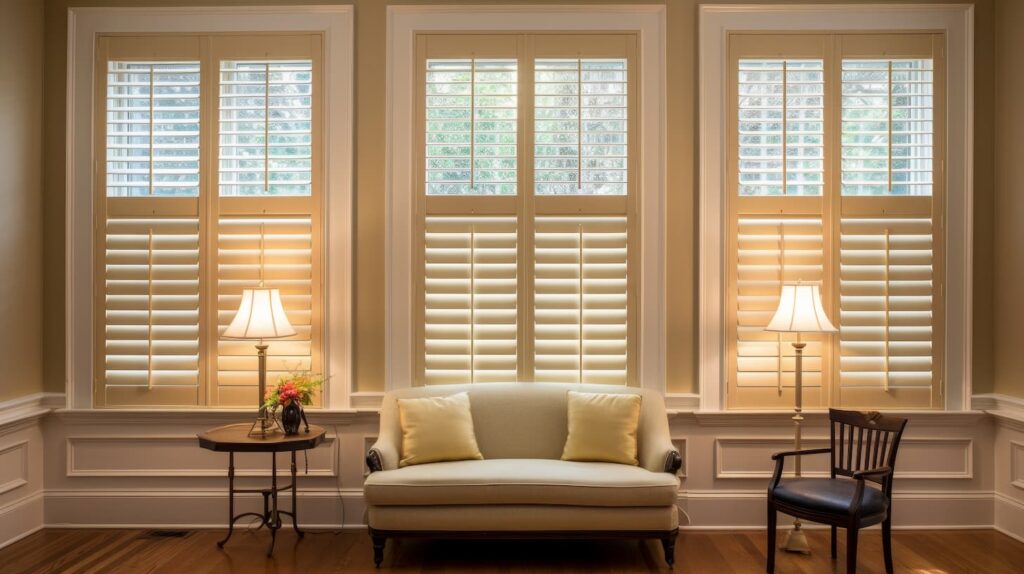
There’s a reason window shutters have been a staple of home design for centuries. They’re functional, they’re beautiful, and when chosen thoughtfully, they can completely change the way a room feels and even help offset their own cost over time.
But not all shutters are created equal, and that’s exactly where custom options come in.
More Than Just a Window Covering
Most homeowners start their search for window treatments thinking they just need something to block out the sun or give them a little privacy. Then they discover shutters, and the conversation shifts entirely. Unlike roller shades or vertical blinds, shutters are a permanent design feature. They become part of the room rather than something hanging in front of it.
That distinction matters more than people realize. When you install interior shutters that are built specifically for your windows, you’re dressing up the glass and adding architectural character that off-the-shelf solutions simply can’t replicate. And because they’re built to last, you’re not replacing them every few years the way you might with other window treatments, which means the cost per year of use often ends up lower than it first appears.
The Case for Going Custom
Standard window sizes exist for a reason, but older houses tend to have windows that don’t match anything a big-box store stocks. Custom-size shutters solve that problem directly, ensuring a clean, precise fit that looks intentional rather than improvised. A poor fit also means wasted material you paid for, and ill-fitting shutters tend to need earlier replacement, turning what looked like a bargain into a recurring expense.
Beyond fit, customization opens a world of design decisions. And that applies both inside and out. For homeowners exploring exterior shutter options alongside their interior choices, the same principle holds: a made-to-measure approach almost always outperforms generic sizing in both appearance and function.
Back inside, louver size changes both the look and the function of a shutter dramatically. Standard or wide louver shutters each have their place depending on the room, the view outside, and how much light control matters to you. Wider louvers tend to feel more contemporary and let in more light when open, while narrower ones offer a more traditional aesthetic.
Frame style is another detail that quietly does a lot of work. The way a shutter is framed against the window opening affects whether it looks like a natural part of the architecture or an afterthought.
Choosing the Right Material
This is where things get interesting, because material choice affects not just appearance but long-term performance.
Real wood shutters, particularly those made from North American basswood, have a warmth and texture that’s hard to replicate. Real wood plantation shutters are a classic for a reason, offering clean lines and a timeless look that works in both traditional and modern interiors. They do come at a higher price point, and in the wrong conditions, that investment can deteriorate faster than expected.
That said, wood isn’t always the right call. For many rooms, it isn’t the smartest financial choice either. Bathrooms, laundry rooms, and any space with high humidity are better served by faux wood window solutions.
Faux wood shutters made from composite or PVC vinyl hold up beautifully in conditions that would warp or damage real wood over time. They’re easier to maintain, resistant to dust and dirt, and unlike real wood, they won’t need refinishing down the road. The lower upfront cost, combined with minimal maintenance, makes them a better value for a large portion of the home.
Vinyl custom-size shutters and polymer shutters are also worth considering for exterior applications. They handle weather exposure without fuss, and maintenance-free custom exterior shutters can dramatically improve curb appeal without adding to your seasonal to-do list or your maintenance budget.
The Energy Efficiency Angle
Interior window shutters are one of the few window treatments that can offset their own cost over time. Unlike fabric shades that let air seep around the edges, a properly fitted shutter creates a rigid barrier against the window frame, minimizing heat transfer in both directions. That helps reduce the workload on your HVAC system year-round. And in homes with real seasonal temperature swings, the savings on monthly utility bills add up.
The better the fit, the better the performance. A precisely fitted shutter outperforms a generic one on energy savings, making the upfront price difference easier to justify.
Cellular shades are often cited for their incredible energy efficiency, and they deserve that reputation. But well-fitted shutters with divider rails and thoughtfully chosen tilt options offer a compelling combination of thermal performance and visual appeal that shades alone can’t match.
Details That Pull It All Together
The difference between shutters that look good and shutters that look great often comes down to the finishing details. Cafe-style shutters, which cover only the lower half of a window, are worth a closer look for budget-conscious homeowners. You get the privacy and design character of full shutters at a lower material cost, making them a particularly smart choice for kitchens and street-facing rooms where you want light from above but privacy below.
Arched shutters can follow the curve of non-rectangular windows in a way that feels custom and intentional. Shutter toppers and window headers help frame the installation so it reads as a cohesive design decision rather than a standalone element.
Cordless controls add a clean, uncluttered look to any installation. This is particularly useful in children’s rooms or anywhere a streamlined aesthetic is the goal.
A Worthwhile Investment
Custom window shutters are built to last, and that longevity is part of what makes them such a good choice for your home. They don’t need regular replacement or refinishing, and they can meaningfully reduce energy costs over time. And because they’re considered a permanent architectural feature, they can contribute to your home’s resale value in a way that curtains or blinds simply don’t.
The way a room feels more finished, the way natural light becomes something you control, the way a home just looks more like itself. That’s the real transformation, and it’s one that keeps delivering long after the installation is done.