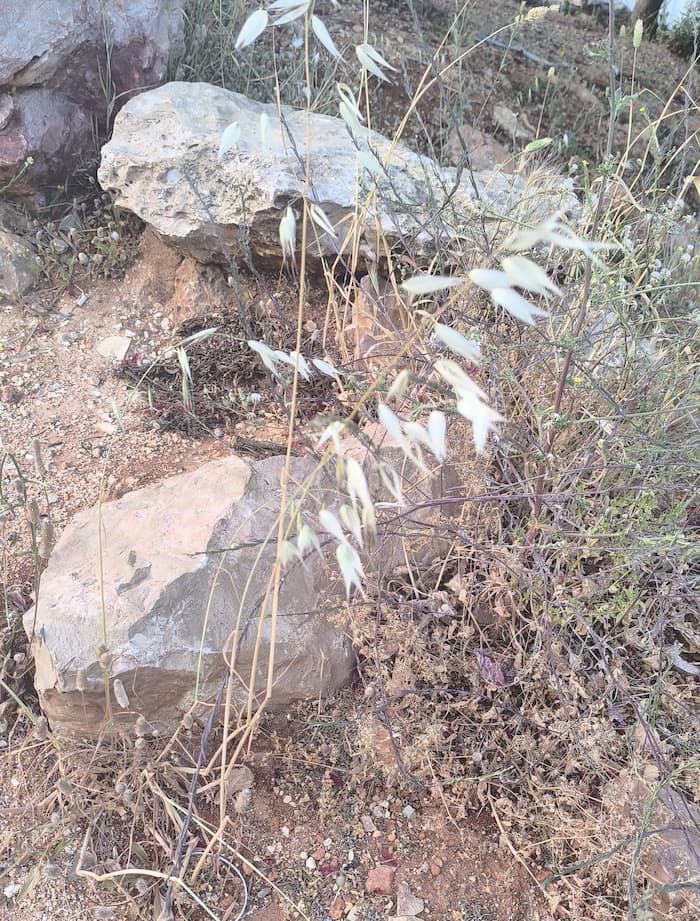
Oatstraw is something I forage nearly every time I teach a foraging and cooking class, because it is something that is so delicious and tasty, easy to find, and healthy. But let me not get ahead of myself.
Oatstraw is the stalk, stem, and hulls of oats. Wild oats in particular is what I use, but you can use from regular oats if you have access to them. Oats are the genus avena with about 25 different species that grow around the world. The wild oats that I’m talking about are mostly avena fatua and avena sterilis and they are native to Eurasia and North Africa, but they have been naturalized around the world, so you likely have wild oats where you live.
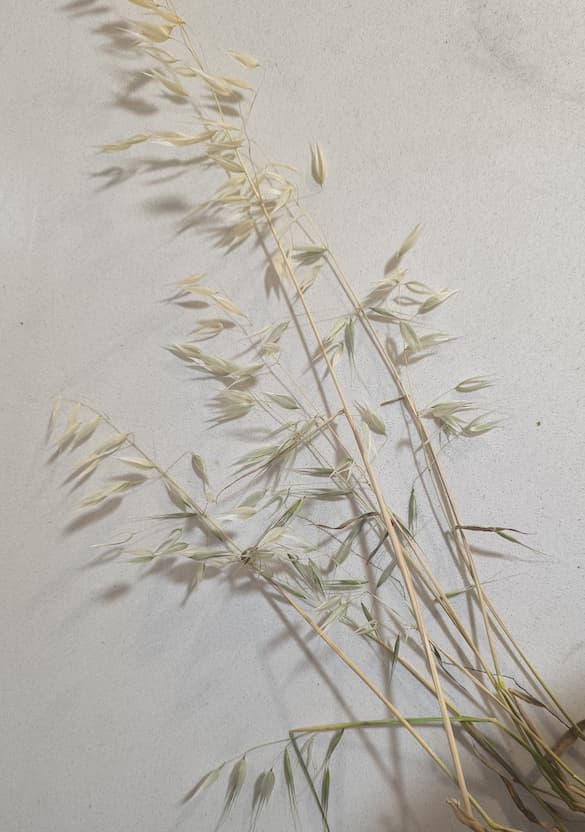
When I teach about wild oats in my foraging classes, I teach that unlike wheat and barley where the seed heads grow upright, with wild oats the seeds hang downwards, also known as nodding structures.
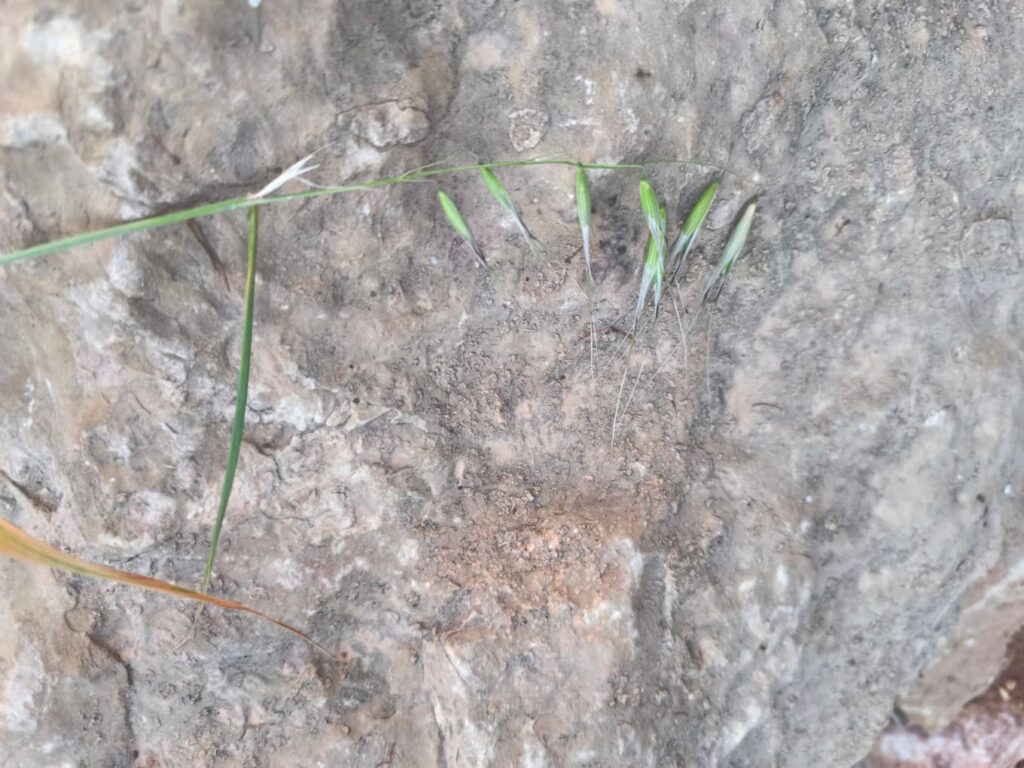
Oats start off green, and when they’re green you can pick out the oats from within these nodding structures, called florets, though they don’t look much like flowers, or the seed heads. Finding the edible oats within them is luck of the draw, because if you wait too long the seeds will have fallen out, but if you try too early the oats will be too tiny to find.
These seed heads can get stuck on your clothes or in your shoes (I’ve had them burrow in and they’re difficult to get out), and locally there’s a game kids play where they throw a bunch at someone, and the number that stick to you is supposedly how many children you’ll end up having.
Lorem ipsum dolor sit amet, consectetur adipiscing elit. Ut elit tellus, luctus nec ullamcorper mattis, pulvinar dapibus leo.
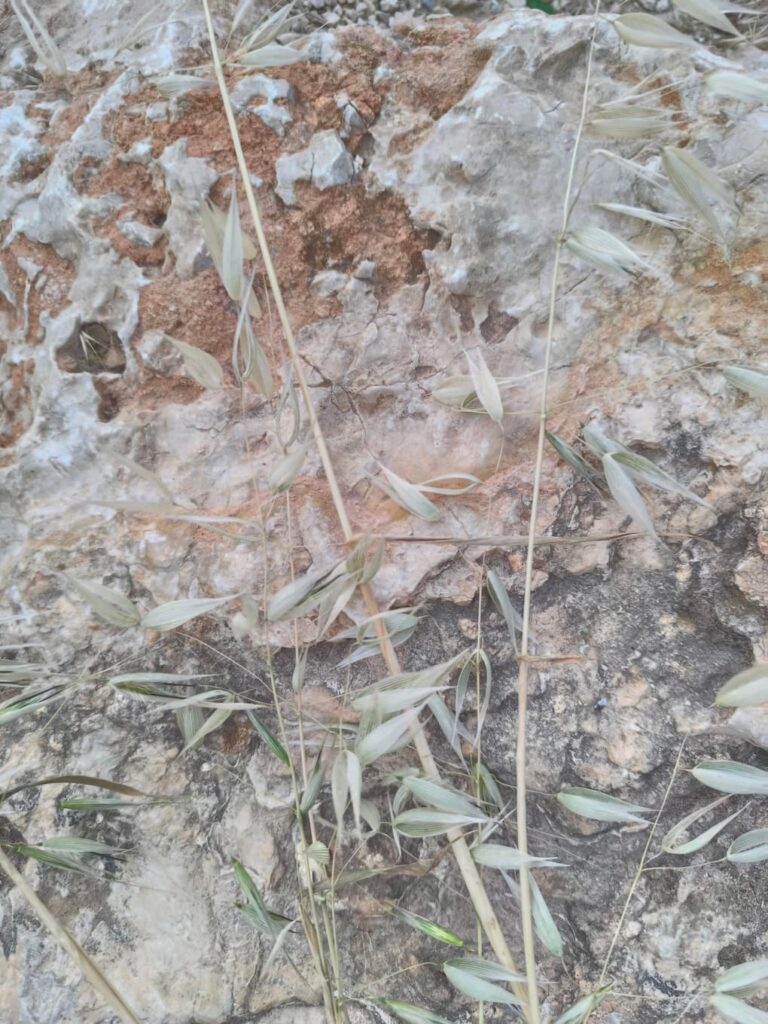
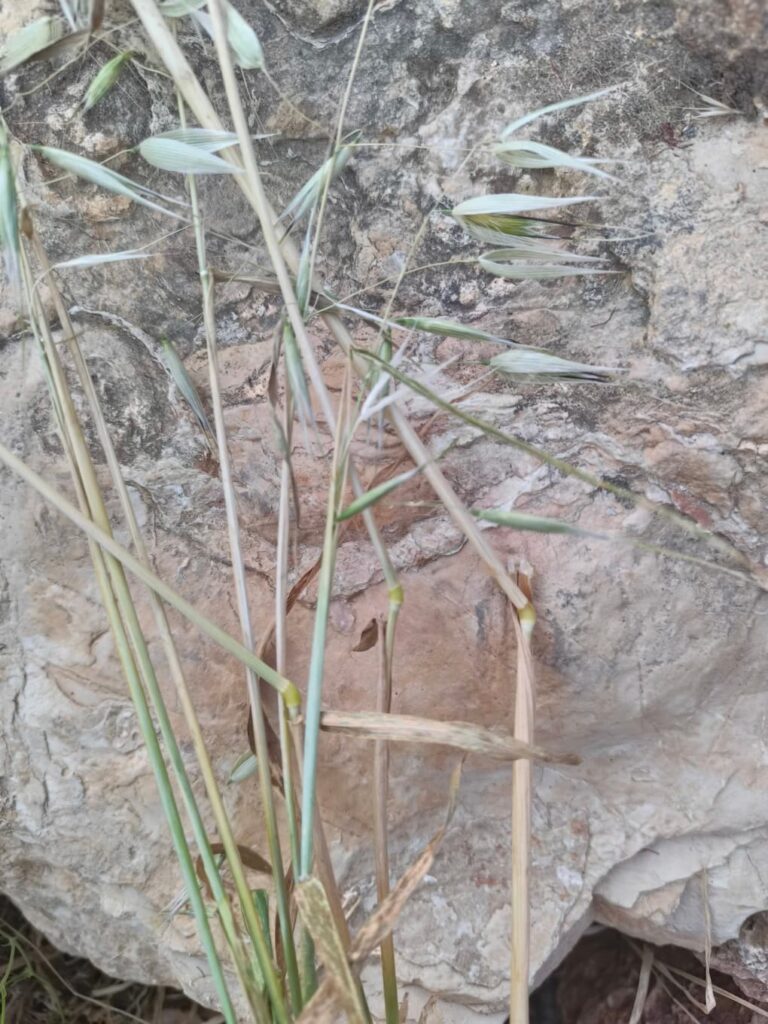
After the green stage they’ll end up yellow, dry and straw like, with the seeds having fallen out and just papery wisps left, and you can find them like this even throughout a dry, dry summer, when nothing else seems to be growing. Hence my using it nearly always for my foraging classes- I’m essentially guaranteed to find wild oats.
So, what are the benefits of oatstraw?
Traditionally, oatstraw has been used medicinally as a stress reliever, to help reduce anxiety, and to improve mood, while not acting as a sedative. Is this scientifically provable?
Well, let’s start by talking about what isn’t debated.
Oatstraw is high in manganese, zinc, iron, magnesium, and calcium, as well as silica, phosphorus, and potassium. It also is a rich source of B-complex vitamins (including thiamine, riboflavin, niacin, and B6) and contains vitamins A, C, E, and K.
Oatstraw also contains antioxidants called avenanthramides, which work as anti-inflammatories in the body.
Here are what studies have shown about oatstraw:
- It improved blood flow, likely by increasing the production of nitric oxide, a molecule that helps dilate blood vessels. This may help prevent heart attacks and strokes.
- The avenanthramides help reduce inflammation, and inflammation is linked to heart disease, type 2 diabetes, and certain types of cancer. They also reduce the production and secretion of cytokines, compounds linked to increased risks of heart disease and other chronic conditions.
- There have been mixed results about whether or not it helps brain function and memory, depending on the study. In people with impaired memory, it helped brain function and reduced responses to stress, but in people with normally functioning brains there was no improvement.
- The extract may help improve mood by inhibiting phosphodiesterase type 4 (PDE4), an enzyme found in immune cells. Research suggests that reducing PDE4 activity may help lower stress, anxiety, and depression.
- A reduction in cytokines may help with depression and other mental health disorders.
- A rat study, not yet replicated in humans, showed that oatstraw helped rats cope with and react to stress.
(The sources for all those can be found here.)
And best of all, studies so far have not shown significant adverse effects from oatstraw.
The biggest potential issue with oatstraw is gross contamination from gluten, but if you harvest your own oatstraw you can make sure that there’s no cross contamination, and wash off any oats that touched wild wheat.
Just a note, I don’t tolerate eating oats, but oatstraw doesn’t bother my stomach in the slightest.
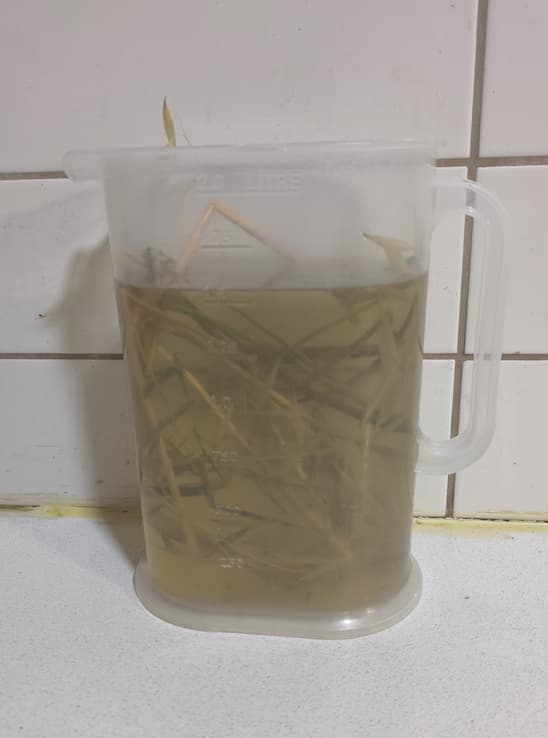
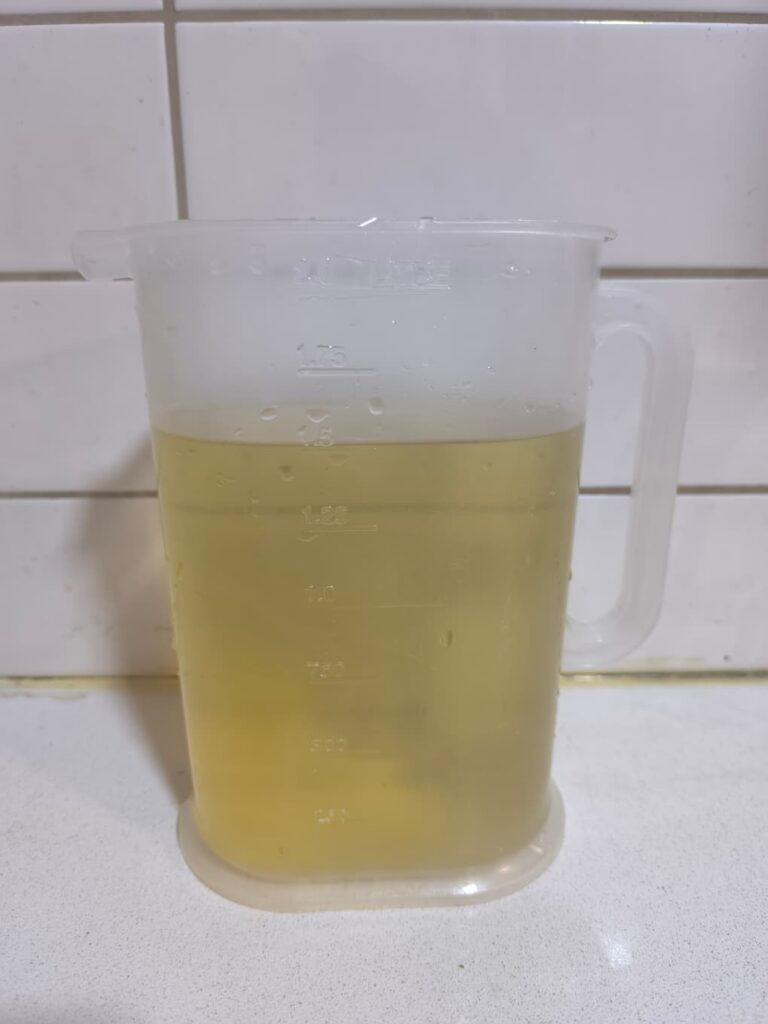
Once you have your tea steeped, strain it either through a sieve or a cheesecloth. The pieces are large enough that even a pasta strainer can work.
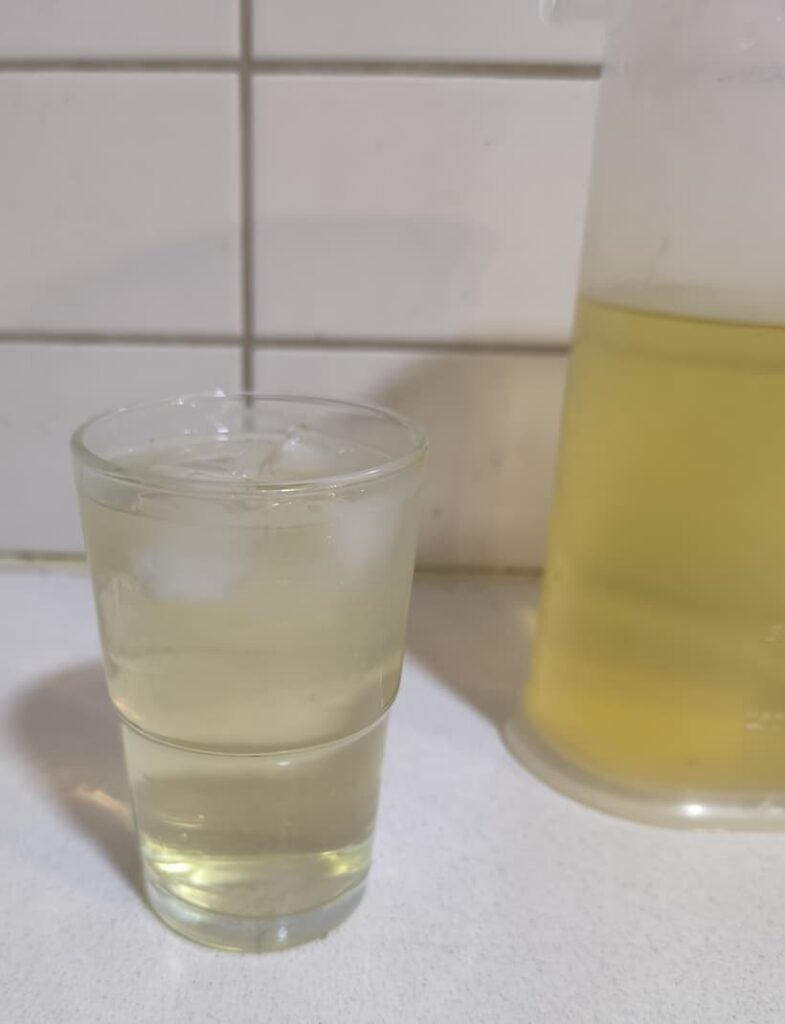
Once strained, decide if you want it hot or cold; it is equally pleasant both ways. I tend to have mine hot when it is first made and then cold as iced tea the next day after refrigerating it.
Additionally, decide whether you want it sweetened or not. I, who always has my tea sweetened, enjoy oatstraw tea unsweetened, it is that pleasant tasting, but it’s completely your call. Sweeten it to taste.
You can add some lemon juice to it to make oatstraw lemonade.
You can add it to fruit and greens to use it in a smoothie.
You can even make it into popsickles if you sweeten it first.
Basically, the sky is the limit.
Oatstraw is super easy to forage, tastes good, and is super healthy; what’s not to like?
Get out and forage some today!
Have you ever seen wild oats growing near you? Have you ever foraged it or had oatstraw tea before? Have you enjoyed it? If you’ve never had it, does this seem like something you’d forage?