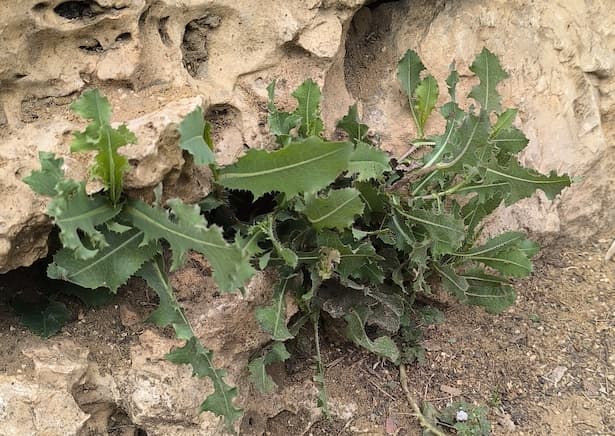
If you’re a fan of lettuce, wild lettuce is a whole different ballgame. You can’t expect to eat it regularly in a salad and enjoy it with tomatoes and cucumbers, for example. It is very, very bitter. You can have it in minimal amounts in a larger salad to give a balance and slightly bitter taste, something that helps make the ideal salad (if you read my post about how to make the perfect salad from just about anything).
The reason you’d forage wild lettuce is actually because of its medicinal aspects, not to mention its fun aspects.
But first, let me tell you more about it.
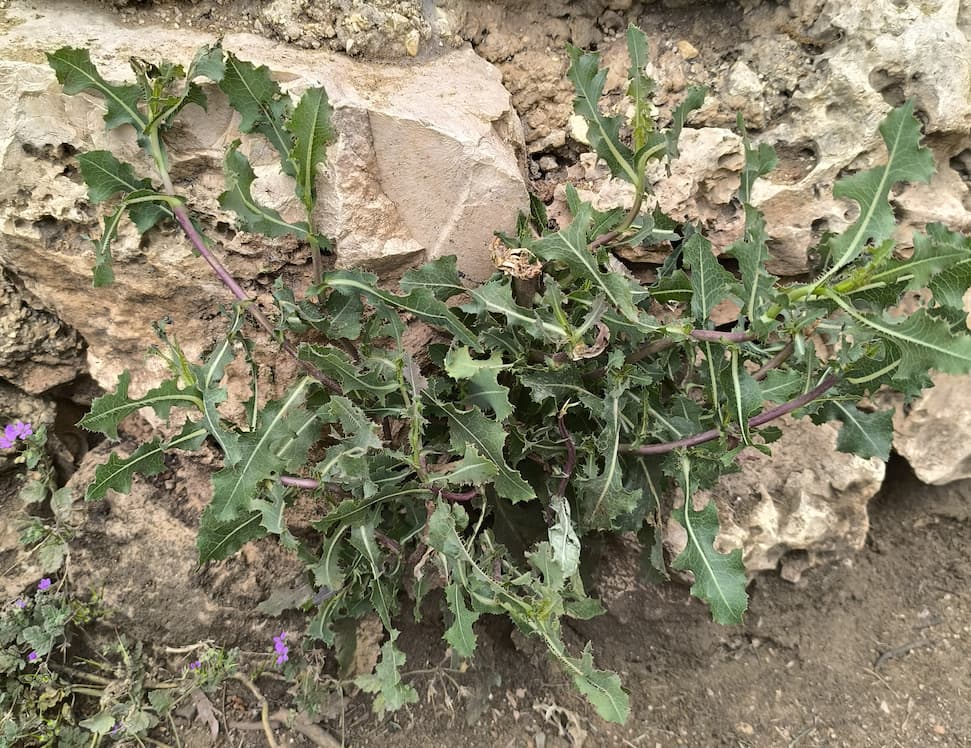
Prickly lettuce, also known as wild lettuce, scarole, and compass plant (and apparently annoyingly mistakenly called milk thistle, but I am in denial about that, because it isn’t a thistle and isn’t related to actual milk thistle), in Latin as lactuca serriola, and is the closest wild relative to cultivated lettuce, lactuca sativa.
It is native to Eurasia and North Africa but has been naturalized around the world.
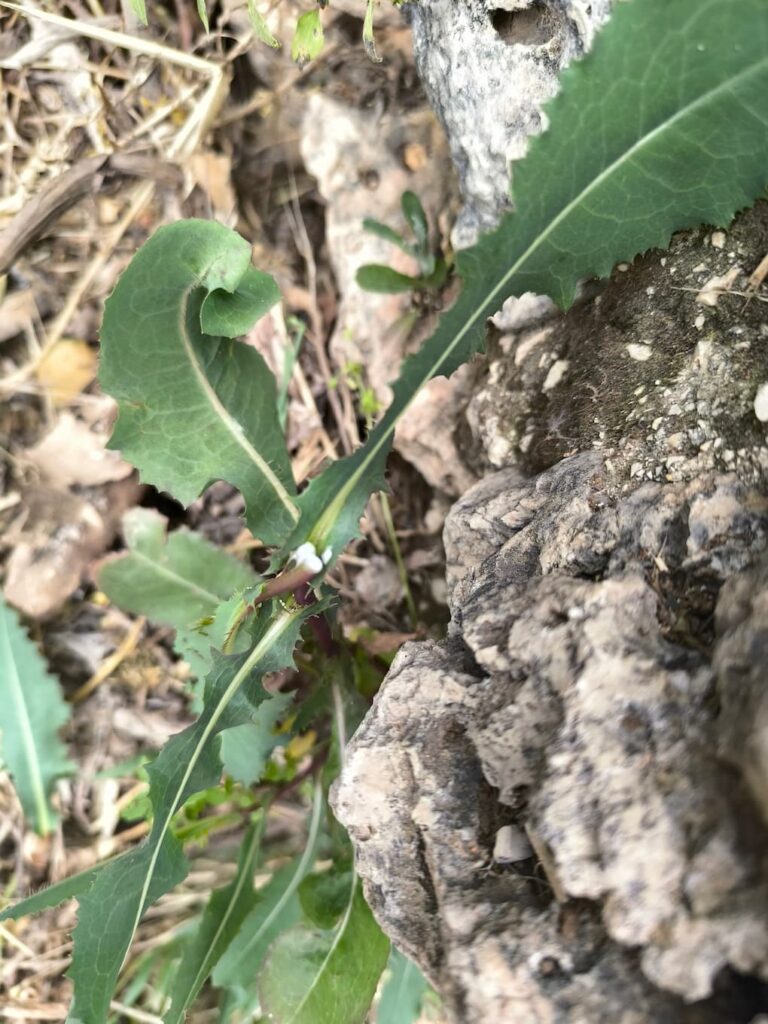
Wild lettuce is in the tribe Lactuceae, the same tribe as chicory, dandelion, sow thistle, and more, and like everything else in that family, it has a milky sap when broken (hence the name lactuceae, from lacto, meaning milk). This milky sap is where the medicinal aspect comes in. The milky sap is called lactucarium, which functions as a “feeble opium” to treat pain, insomnia, anxiety, and coughs.
You can find it in all seasons other than snowy weather, from my experience. It grows when it’s wet and rainy and also in dry summers- that’s when it is tallest.
The leaves change shape a lot. At first they are more oval shaped with spiky edges, and then there are larger more developed leaves with deep cut-outs along the sides, giving them a shape that’s a bit like a stretched-out, pointier version of an oak leaf. The sides dip in and out in long, jagged sections, with sharp tips rather than soft, rounded curves.
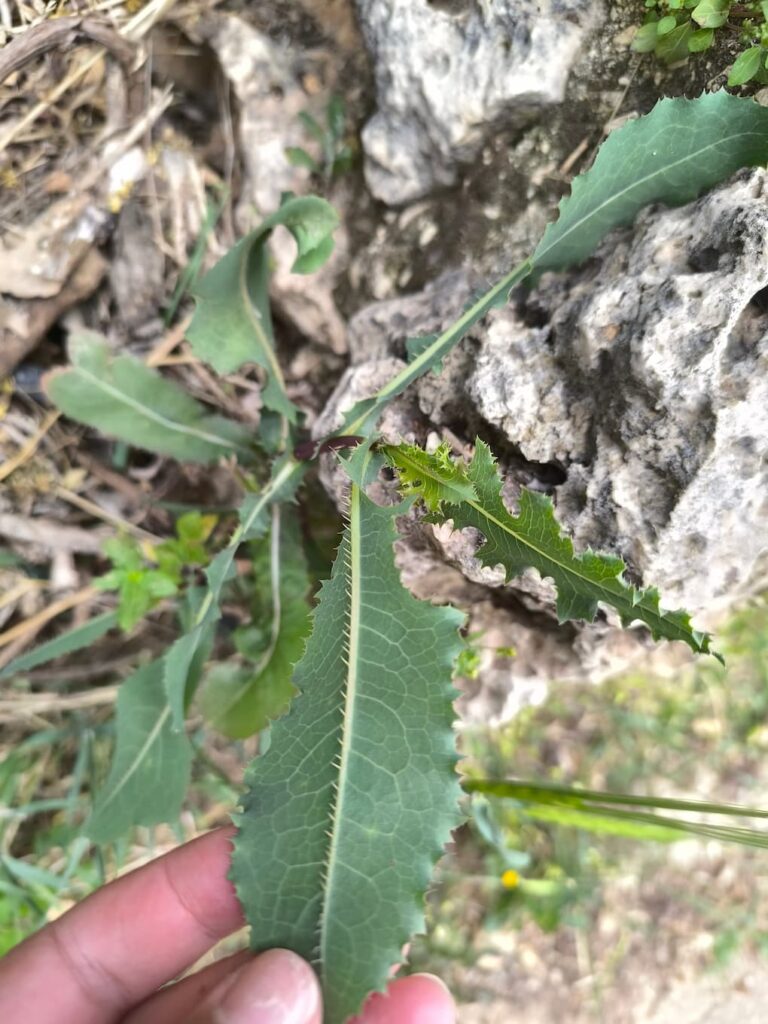
One clear identifying feature of the plant is the line of thorns growing down the spine in the center of the back of the leaf. If you want to eat these, you can easily remove these thorns by running your nails down the spine.
The leaves all grow off a central stalk that eventually becomes brownish and woody and up to 6 feet tall.
To use this plant medicinally, you can either make it into a tea or tincture or smoke it. If you smoke it, it causes a relaxing, calming effect, a legal “high”, which is my favorite way to use it. I joke that the teenagers smoking weed near me could save money by foraging this instead.
Commonly mentioned traditional uses include:
- Mild sedative / relaxation aid
- Muscle relaxation and reduction of restlessness
- Headache relief
- Menstrual cramp relief
- Digestive calming (sometimes used for stomach tension or nervous digestion)
- Mild antispasmodic effects
- Historically used for nervousness and agitation
Some people also specifically use it for:
- Stress-related tension
- Racing thoughts at night
- Body aches after physical labor
While proper identification for foraging plants is very important to make sure not to accidentally ingest something poisonous, this plant is pretty unmistakable (milky sap and a line of thorns down the back of the stem), and if you accidentally confuse it for another plant it’ll be something else in the lactuceae tribe which is also edible.
So, are you ready to forage wild lettuce now? Have you ever seen it near you? What do you think you’d use it for? Would you eat it, tincture it, make it into a tea, or smoke it?