
What do you like to eat when traveling? So many people go to restaurants while out and about because feeding yourself while traveling is challenging. If you buy snacks along the way, it also gets expensive since gas stations and vending machines are far from frugal. Here are some budget friendly snacks that work well for your days on the road or in the air.
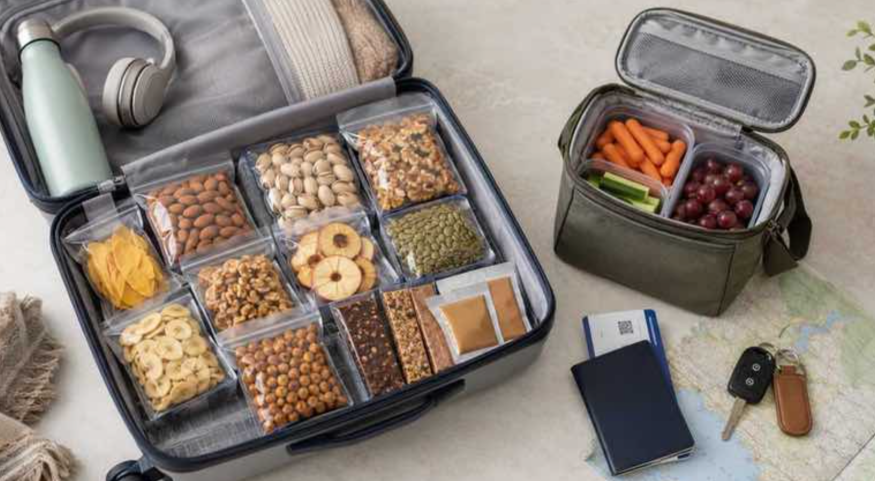
Travel has a way of making food expensive. You get hungry at the worst moments; the only option nearby is a gas station or an airport kiosk, and suddenly a bag of chips and a bottle of water cost more than lunch at home. When you have kids, it happens several times a day. The fix is simple but takes a little planning: bring the snacks with you. Packing your own food saves money, gives you control over ingredients, and keeps everyone calmer, because a hungry child (or a hungry adult) is rarely at their best on a long travel day.
Here is how to pack smart for road trips, flights, and full days of sightseeing without overspending.
Why Snacks Quietly Wreck a Travel Budget
Travel snacks rarely feel like a big expense because each purchase is small. A drink here, a candy bar there, a bag of something salty at the next stop. But those purchases are made in places that know you have few other choices. Airports, highway rest stops, tourist attractions, and train stations generally charge more than a regular grocery store, and the selection is often heavy on sugary and highly processed foods.
Over a multi-day trip with a family, those small buys add up to a real number. Setting aside an hour before you leave to shop and pack is one of the easiest ways to protect your vacation budget. It also means you are not making food decisions when everyone is tired and cranky.
Start With a Simple Snack Plan
Before you shop, think about the trip in terms of how many hours you will be traveling and how many snack times you will have. A rough plan might include a snack for the morning, one for the afternoon, and a few extras for delays or hungry moments. It is better to bring a little more than you think you need, since traffic jams, delayed flights, and long lines happen.
Aim for a mix of foods rather than all one type. Something with protein or fat, such as cheese, nuts, or nut butter on crackers, keeps people full longer than a sweet snack alone. Pair that with something fresh, like fruit or raw vegetables, and something crunchy or salty for variety. A mix of textures and flavors keeps kids from getting bored with the same thing.
Shop at a regular grocery store, not a convenience store, and consider buying larger packages of things like crackers, popcorn, and dried fruit, then dividing them into smaller portions at home. Single-serve packages are convenient, but you pay extra for the packaging. Reusable containers or resealable bags do the same job for less.
Road Trip Snacks That Travel Well
A road trip gives you the most flexibility because you can bring a cooler, a bag of dry goods, and as much as will fit in the car. That freedom also makes it the easiest trip to save money on, as long as you keep a few things in mind.
Good non-perishable options for the car include:
- Air-popped popcorn, which is a whole grain and naturally gluten-free
- Crackers and rice cakes
- Homemade or store-bought granola bars
- Dried fruit
- Trail mix
- Apples, oranges, and bananas, which hold up well without refrigeration
- Roasted chickpeas
- Peanut butter or sunflower seed butter sandwiches
If you have a cooler, you can add string cheese, yogurt, hard-boiled eggs, sliced vegetables, hummus, and sandwiches. Having real food on hand also means you can skip a restaurant stop or two, which saves both money and time on the road.
One safety note matters here. The USDA advises that perishable food should not sit out at room temperature for more than two hours and only one hour when the temperature is above 90 degrees Fahrenheit. A cooler with plenty of ice or frozen gel packs helps keep cold food at a safe temperature, which the USDA lists as 40 degrees Fahrenheit or below. Pack the cooler right before you leave, keep it out of direct sun, and avoid opening it more than necessary. A trick that helps is keeping a smaller bag of dry snacks within reach and the cooler packed away for mealtimes.
Keep the car tidy while you are at it. Bring a small trash bag, a pack of wipes, and napkins, because snacks and car seats are a messy combination.
Packing Snacks for Flights
Air travel adds some rules, but you can still bring plenty of food. In the United States, the Transportation Security Administration generally allows solid foods through the security checkpoint in carry-on bags. Items like sandwiches, crackers, fruit, granola bars, nuts, and cheese are typically fine.
The limits apply to liquids, gels, and spreads. The TSA applies its 3-1-1 rule to these, which means containers of 3.4 ounces (100 milliliters) or less. Foods like peanut butter, hummus, yogurt, and jelly are treated as liquids or gels for this purpose, so a large jar will not make it through security in a carry-on. If you want to bring them, pack small portions or put them in checked luggage. Formula, breast milk, and baby food are handled differently, and the TSA allows them in reasonable quantities for a child traveling, but check the current guidance before you go since details can change.
An empty reusable water bottle is another smart item. You can carry it through security empty and fill it at a water fountain or refill station on the other side, which saves you from paying airport prices for bottled water.
Because flights can be delayed and meal service on short flights is often limited or sold for a fee, pack enough food to cover a longer day than you expect. Also remember that if you are flying with someone with a food allergy, a sealed snack from home is often safer than guessing at what is for sale.
Crossing Borders With Food
If your trip crosses an international border, food rules get stricter. Many countries restrict or prohibit bringing in meat, dairy, fresh fruit, vegetables, and plant products to protect agriculture and prevent the spread of pests and disease. The rules differ widely, so check the customs or agriculture authority of the country you are visiting and the rules for returning home. When you fill out a customs declaration, declare any food you are carrying. Failing to declare it can result in fines, even if you did not realize the item was restricted.
The safest approach for international trips is to pack commercially packaged, shelf-stable snacks and to eat or throw away anything fresh before you arrive.
Protein Snacks for Low Carb Travelers
If someone in your family eats low carb, travel can be especially tricky, because so many convenient snacks are built around crackers, chips, cookies, and sweetened bars. Planning ahead matters even more.
Keto beef jerky is a popular travel snack for this reason. It is shelf-stable, lightweight, and does not need refrigeration, so it fits easily in a carry-on, a glove box, or a day bag. It also provides protein, which can help people feel full between meals. The keto diet is generally a very low carbohydrate way of eating, so the main thing to look for is a product with little or no added sugar.
That is where reading labels becomes important. Many ordinary jerky products are flavored with sugar, honey, or sweet marinades like teriyaki, and the carbohydrates can add up. Products marketed as keto or low carb are made to keep sugar low, but you should still check the nutrition label and the ingredient list rather than trusting the front of the package. Jerky is also typically high in sodium, so drink plenty of water while you travel. And if anyone in your family avoids gluten or soy, look carefully, because some jerky is flavored with soy sauce, which often contains wheat.
Jerky can also be expensive per ounce, which does not always fit a frugal budget. You can stretch it by pairing it with cheaper low-carb foods. Cheese sticks, hard-boiled eggs, nuts, seeds, olives, celery sticks with nut butter, and cucumber slices all work well on a trip and generally cost less than specialty snacks. If you have the time and an oven or dehydrator, making your own jerky at home is another option that can lower the cost, though you should follow safe food handling guidelines for drying and storing meat.
Allergy-Friendly Travel Snacks
Traveling with food allergies or intolerances takes extra care, and snacks are one of the best tools you have. Packing your own means you know exactly what is in the food, and you do not have to scramble to find a safe option in an unfamiliar place.
Read ingredient labels every time, even on foods you buy regularly, since manufacturers can change recipes. Look for the allergen statements that appear on packaged foods in many countries, and keep any required medications, such as epinephrine auto injectors, with you and not in checked luggage. For flights, contact the airline before your trip to ask about their policies on allergens, since policies about nuts in particular vary from airline to airline.
Naturally allergy-friendly options include fresh fruit, raw vegetables, plain popcorn, rice cakes, and seeds if nuts are the concern. Many people with celiac disease or gluten sensitivity also rely on certified gluten-free labeling to confirm a product is safe. For people avoiding dairy, check the ingredients on foods like crackers and granola bars, since milk can show up in unexpected places.
Keep Little Kids Safe
If you are packing for babies and toddlers, pay attention to choking hazards. The American Academy of Pediatrics lists foods such as whole grapes, popcorn, whole nuts, hard candy, and chunks of raw vegetables or meat as choking risks for young children. Cutting grapes lengthwise into small pieces, choosing softer foods, and having young children sit upright while they eat, instead of snacking while the car is moving or while they are lying down, can reduce the risk. In a car, an adult should be able to watch the child while they eat.
Snacks for Long Days Out
Day trips to theme parks, zoos, museums, and festivals can turn into expensive food outings fast, because everything inside is sold at a premium. Many attractions have rules about outside food, and those rules differ a lot. Some allow small bags and soft-sided coolers, some allow only certain items, and some ban outside food entirely, with exceptions for medical or dietary needs. Check the attraction’s website or call before you go so you know what you can bring.
A small backpack with a refillable water bottle and a handful of dry snacks gives you a lot of flexibility. Pick foods that do not melt, crush easily, or need refrigeration, such as crackers, granola bars, dried fruit, nuts if no one has an allergy, and fresh fruit that comes with its own peel. Consider scheduling a picnic lunch outside the gates or at a nearby park if re-entry is allowed, which can save quite a bit compared to eating inside.
Pack It So It Actually Gets Eaten
How you pack snacks affects whether they get eaten or wasted. Use containers that are easy for kids to open and close, and portion food into amounts that make sense so nothing goes stale or soggy. Keep snacks that kids can reach on their own within easy access, and put the rest in a bag you control. Rotate through the options so the same item does not show up at every stop.
Let your kids help choose a few of the snacks. People are far more likely to eat food they picked out, and giving children a small say can cut down on complaints. Setting a rule, such as one treat per day from a store, lets everyone feel like they have a vacation without turning every stop into a purchase.
The Bottom Line
Smart snack packing is one of the simplest ways to cut the cost of travel. Make a plan before you leave, shop at a grocery store, choose a mix of filling and fresh foods, and learn the rules for flying, crossing borders, and visiting attractions. If someone in your family needs low-carb or allergy-friendly food, packing your own gives you control, whether that means keto beef jerky and cheese or fruit and rice cakes. A little preparation keeps everyone fed, keeps the budget intact, and leaves more money for the parts of the trip you will actually remember.