Summer is a chance to trade passive screen time for active adventures that actually stick. A well-designed kids obstacle course turns running, climbing, and balancing into problem solving that builds strength and confidence at the same time. It’s a simple way to make the break memorable, meaningful, and full of skills that last long after vacation ends.
As the school year ends, parents face the perennial question of how to make summer both memorable and meaningful. The goal is to find activities that capture a child’s energy and imagination while building skills that last a lifetime, moving beyond passive screen time or unstructured play.
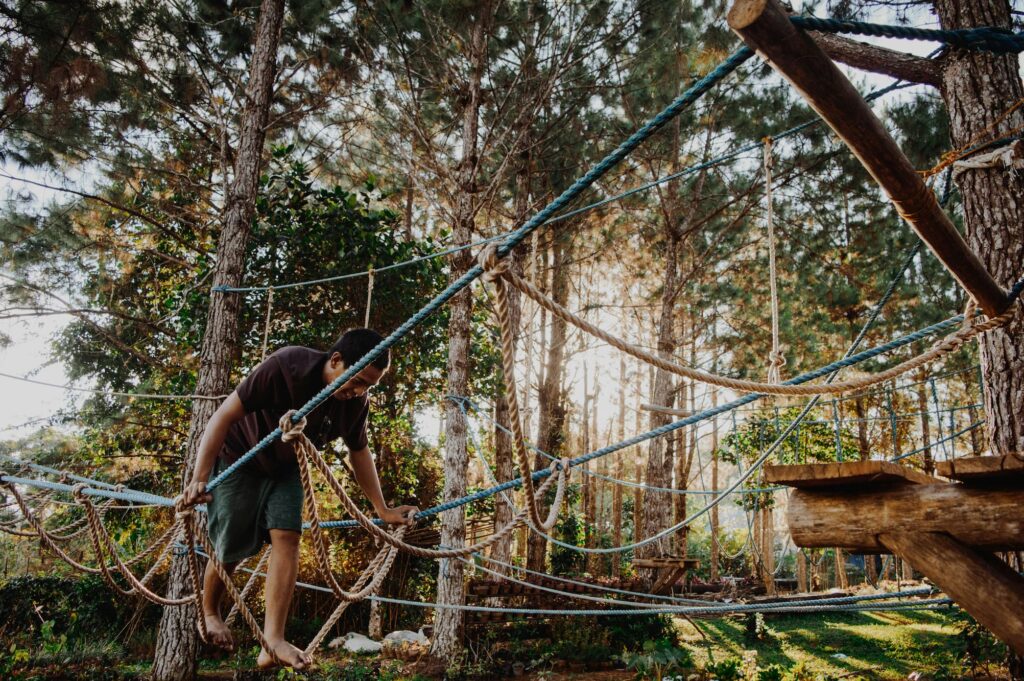
A well-designed kids obstacle course offers a compelling answer, providing a dynamic environment where children are challenged in a multitude of ways at once. Here, running, climbing, and balancing are not just motions but solutions to tangible problems. With each rope they scale and wall they conquer, children gain more than just physical strength; they build a genuine sense of accomplishment and a foundation of self-confidence.
This unique blend of physical exertion and mental engagement makes it one of the most effective tools for fostering holistic development during the long summer break, creating lessons that stick long after the season fades.
The Adventure of All-Body Fitness
Unlike the repetitive drills of many traditional sports, an obstacle course offers a comprehensive workout that enhances a child’s entire physical toolkit. The constantly changing nature of the challenges demands a wide range of motion, engaging muscles that might otherwise be neglected. A single course builds numerous skills simultaneously:
- Crawling under a net: Develops core strength and coordination.
- Balancing on a beam: Hones focus and proprioception (body awareness).
- Climbing a slanted wall: Builds functional upper-body and grip strength.
This is fitness in its most practical form. Because each new station presents a different puzzle to solve, the experience feels more like an adventure than a workout. This inherent variety fights off boredom and encourages enthusiastic participation, helping children develop a positive relationship with physical activity and discover the joy and capability of their bodies.
Training the Mind Through Movement
An obstacle course challenges the mind just as much as the body. Each new station is a problem to be solved: How high do I need to jump? Where is the best place to put my hands and feet? What’s the most stable path across this beam? This rapid-fire process of assessing a situation, creating a plan, and adapting on the fly is a powerful workout for a child’s executive functions. It teaches them to think critically under pressure and to stay focused on a goal.
More importantly, it cultivates true Mission Grit – that essential combination of perseverance and passion that allows a person to push through difficulty. When a child decides to try an obstacle one more time instead of walking away, they are actively practicing the kind of resilience that will serve them in the classroom, in their friendships, and their future careers.
Stronger Together: The Social Side of Obstacles
When children tackle an obstacle course in a group, it transforms from an individual test into a lesson in teamwork and community. Suddenly, success is not just about personal achievement but about collective progress. You see it when one child gives another a boost over a high wall, when a team huddles to strategize the best way to cross a “lava pit,” or simply in the chorus of cheers that erupts when a friend finally conquers a tough challenge. These interactions teach vital social skills like communication, trust, and empathy in a very real and tangible way.
This collaborative spirit is often a core component of a structured program like a Mission Grit summer camp, where team-based challenges are intentionally designed to show kids that they can achieve more together than they ever could alone, building powerful bonds through shared effort and mutual respect.
The Freedom to Fail and Try Again
In a world that often puts immense pressure on children to succeed on the first try, an obstacle course offers a refreshing and crucial counter-narrative: it is a safe space to fail. Slipping off a rope, losing your balance, or needing multiple attempts to clear a hurdle is not seen as a shortcoming but as a normal part of the process. This low-stakes environment helps reframe failure from something to be feared into what it truly is: valuable feedback.
In the course, a stumble teaches children that:
- Failure is not final; it’s just a temporary stop on the way to a solution.
- Strategy matters; if one approach doesn’t work, another one might.
- Information is power; each attempt provides data on what to adjust for the next try.
- Effort is what counts; the act of trying again is more important than succeeding immediately.
This experience is fundamental to developing a growth mindset—the powerful belief that abilities are not fixed and that effort and strategy can lead to improvement. It’s a lesson in resilience that builds a deep-seated confidence to face any challenge, on or off the course.
Conclusion
The mud washes off and the sore muscles heal, but the lessons learned on an obstacle course are enduring. This kind of summer activity offers a rare, holistic form of development, simultaneously building a child’s physical literacy, mental agility, and social grace. It is a powerful antidote to the passivity of a screen-filled break, replacing it with dynamic problem-solving and tangible accomplishment.
By investing in an experience that challenges them to push their boundaries, we are giving children more than just a fun story to tell when they return to school. We are equipping them with a toolkit of resilience, a belief in their capabilities, and an understanding that collaboration makes any challenge easier to bear. Ultimately, when we teach a child how to confidently face and overcome a physical wall, we are giving them a blueprint for how to approach every obstacle they will ever encounter in life.