If your driveway is cracked and uneven, it doesn’t just make the front of your home look run-down. It can also become a safety hazard, especially when you have kids running, biking, or playing outside. But before you rush to patch the cracks or replace the whole thing, there are a few important things worth considering so you can choose a solution that is safe, practical, and built to last.
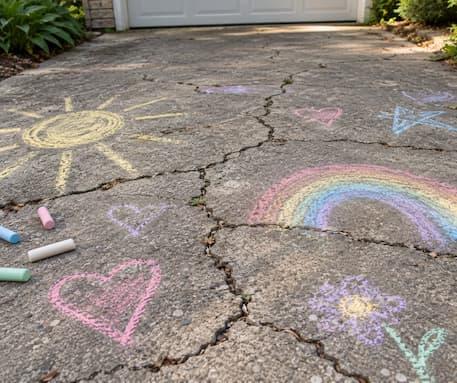
Kids use the front of the house constantly. They draw chalk monsters. They learn to ride bikes without training wheels. You probably spend hours standing out there watching them.
Then the concrete starts to crack. Weeds push through the joints. Suddenly, roller skating becomes a tripping hazard.
We tend to ignore sinking concrete until someone skins a knee or a car tire gets damaged. Fixing it feels like a massive expense for a young family. But patching the same potholes every spring actually wastes money.
Doing it right the first time gives you a safe, smooth surface for years. It saves you from constantly buying quick-fix cement bags at the hardware store. Every time you trip over that jagged edge carrying groceries, you are reminded that temporary patches simply do not hold up to daily family life.
Fixing the Foundation Before Pouring Anything New
The dirt under your house is the real problem. Soil expands when it gets wet and shrinks during a drought. This constant shifting easily snaps standard concrete slabs. You can pour the thickest cement possible, but it will still fail if the ground beneath it moves.
Local geography matters immensely when you are planning a heavy construction project. For instance, an experienced Austin driveway contractor knows exactly how to handle the rocky, shifting limestone common in central Texas. They compress the sub-base properly before mixing any cement.
Building a solid foundation stops those dangerous, jagged lips from forming where two slabs meet. It keeps the surface flat and safe for little feet to run across. Ignoring the dirt quality guarantees you will have the exact same cracks in a few years.
Doing the hidden prep work correctly means you get a reliable surface that survives heavy rains and dry summers without buckling under the pressure.
Comparing Materials for Heavy Foot Traffic
You have to think about how your family actually uses the space. Asphalt is cheap upfront. It melts snow quickly. But it also gets blazing hot in July and sticks to bare feet. Making a smart financial choice means looking at how different materials wear down over the years.
Consider these practical differences before locking in a decision:
- Standard poured concrete: Clean and highly affordable. It handles heavy minivans easily but shows oil stains quickly if your car leaks.
- Asphalt blacktop: Goes down fast and bends slightly with the earth. But it requires messy resealing every few years to stop it from crumbling.
- Interlocking pavers: More expensive initially. If one stone cracks from a heavy delivery truck, you just pull it up and drop a new one in.
If your kids sit on the ground to draw, standard concrete or smooth pavers stay much cooler to the touch during the summer.
Designing a Layout That Actually Fits Your Vehicles
Standard builder-grade slabs are often barely wide enough for two compact cars. You open the door and immediately step into wet grass. Or worse, you accidentally ding your partner’s door while getting a baby out of a car seat. It is incredibly frustrating.
Well-planned custom driveways fix this exact issue. You can extend the edges by just two or three feet. That small addition gives you a comfortable walkway entirely around the car.
You get plenty of room to unload heavy groceries. The kids get a wider canvas for their sidewalk chalk without playing right behind the bumper. Widening the pad also keeps delivery drivers from constantly tearing up the edges of your front lawn.
Planning for Better Water Drainage
Water destroys hard surfaces faster than anything else. If a rainstorm leaves a massive puddle right where you normally park, the surface will eventually degrade. Winter makes this worse. That standing water turns into a dangerous sheet of ice overnight.
A properly graded surface slopes gently toward the street or a dedicated storm drain. It sheds water instantly.
Go look at your parking pad right after a heavy rain. Notice exactly where the water pools up. Mark those low spots with a piece of chalk so you know exactly what needs fixing before heavy machinery ever shows up at your house.