
I’ve recently been to the home of a few seniors who are aging at home and got to see what accomodations have been made to help them thrive. Some of the changes were larger, but many were surprisingly simple and inexpensive while still making a huge difference in their comfort, safety, independence, and overall quality of life. Seeing these practical adjustments firsthand really drove home how much small changes can help seniors continue living fulfilling lives at home.
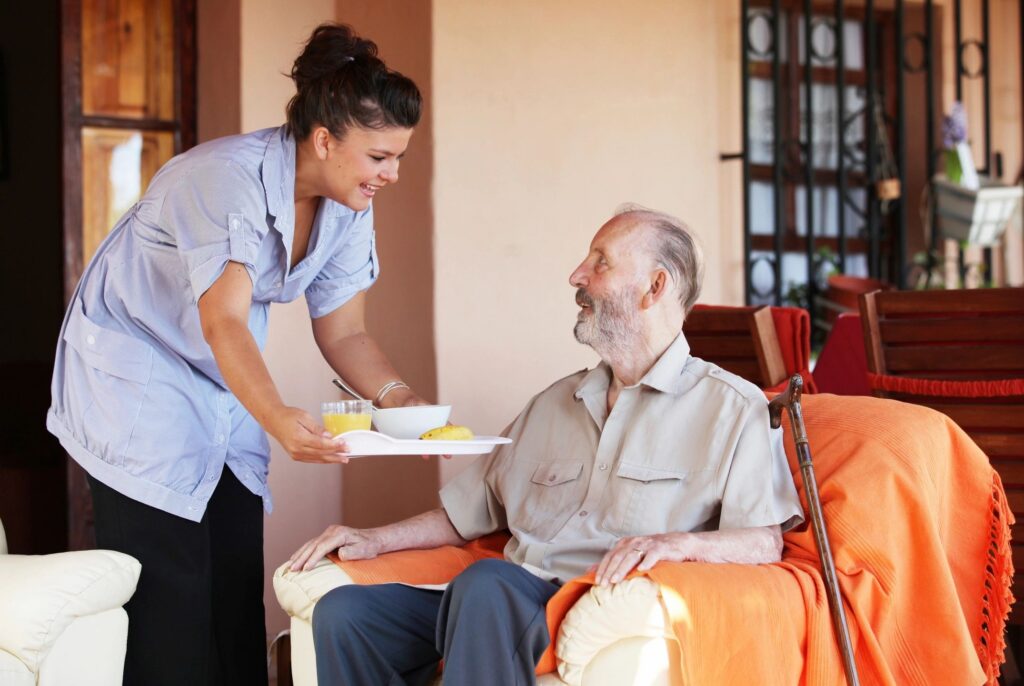
Most people think of expensive renovations, fancy equipment, or full-time care facilities when they want to make life better for an aging parent or grandparents. And while those things are important, the truth is that some of the best ways to improve your quality of life don’t cost much at all.
Money is what most seniors need. It’s about having structure, making connections, having a purpose, and knowing that someone really cares about how you’re doing every day. What’s the good news? Even if you’re on a tight budget, you can still get all of that.
Whether you’re a family caregiver, a concerned adult child, or a senior looking to make your own home life a little fuller, these seven practical tips can make a real difference without breaking the bank.
1. Explore Local Home Care Resources Before You Think You Need Them
This first tip on a “low-cost” list might surprise you but hear us out. A common myth about home care is that it’s only for people who are getting worse, or that it always costs a lot. Neither of these things is true.
If you live in Omaha, in-home care in Omaha has become easier to get. There are more flexible, affordable options that go beyond full-time nursing. Many providers offer companion care, which is when a trained caregiver comes to visit for a few hours a week, checks in, helps with light tasks, and most importantly, makes sure that the person is always in touch with another person. That kind of help, even just twice a week, can make a big difference in how a senior feels about their day-to-day life.
The same is true across the state. Home care services in Nebraska have expanded significantly in recent years, with many agencies offering sliding-scale fees, Medicaid-covered options, and programs specifically designed for seniors who are still largely independent but could use a little extra support. Area Agencies on Aging across Nebraska are also a free resource that can connect families to services they didn’t know existed.
The point isn’t to hand over care — it’s to build a small, smart support system early, so your loved one feels less alone and more secure. That peace of mind? It costs a lot less than most people assume.
2. Create a Daily Routine (It’s More Powerful Than It Sounds)
People don’t like routines. It sounds dull. Stiff. Not inspiring. But for older adults, especially those who live alone, having a set schedule every day is one of the best and easiest ways to improve their mental and physical health.
Here’s why: as we age, the brain genuinely thrives on consistency. Having regular times to wake up, eat, and do things can help you sleep better, lower your stress, and give each day a sense of shape and purpose. Without that structure, days can run together, motivation can drop, and loneliness can slowly grow.
You don’t need to schedule every hour. Start with anchors — a consistent wake time, a morning activity (even just coffee on the porch), an afternoon walk, a regular phone or video call with family. Those small, repeated moments become something to look forward to, and that anticipation alone improves mood.
If you’re helping a parent build a routine, do it with them, not for them. Ask what times of day they feel best. Ask what they’ve always enjoyed but let them slip. Build their preferences, not yours.
3. Get Plants in the House
This one sound almost too simple — but the research behind it is surprisingly robust. Studies in environmental psychology have consistently found that caring for plants reduces stress, lowers blood pressure, and gives older adults a meaningful sense of daily responsibility.
A small pot of herbs on the kitchen windowsill. A hardy succulent on the coffee table. A hanging basket on the porch. These things cost a few dollars at most, require minimal maintenance, and deliver something that matters enormously: the experience of nurturing something living and watching it grow.
For seniors who’ve lost a pet, stopped gardening due to mobility issues, or simply feel like their days lack purpose; plants offer a gentle, low-stakes way to restore that feeling. And if they get really into it? A small container garden on a balcony or patio can become a full hobby.
4. Upgrade the Lighting — Seriously
This is likely the least considered tip in this list, and it is a pity since it is so easy to correct. One of the most significant factors that contribute to the risk of falls and low mood in older adults is poor lighting in the home.
The older we get, the lighter our eyes demand to see clearly – up to three times lighter than those of a 20-year-old. Poor, yellowish lighting not only makes work more difficult, but also influences mood, the natural circadian rhythm of the body, and the chance of trips and falls.
It will only cost less than 20 dollars to replace a few bulbs with bright daylight-spectrum LEDs and can instantly make a home feel more alive and safer. Pay special attention to kitchens, bathrooms, hallways, and staircases. Install a nightlight in the bathroom hallway. They are small investments that have outsized returns.
5. Help Them Find “Their People” Again
Social connection isn’t nice to have for seniors. It’s a health necessity. Chronic loneliness has been linked to cognitive decline, weakened immunity, and increased mortality — yet it affects millions of older adults who simply don’t have the same social structures they once did.
The solution doesn’t have to be complicated or expensive. It just has to be consistent.
Ideas that really work:
- Senior centers: They are available in most communities, and they are either free or extremely low-cost. They serve food, entertainment, courses and above all, familiar faces that are known to them.
- Religious communities: Among religious and spiritual seniors, re-connecting with a local congregation (or attending one the first time) can offer socialization as well as a feeling of transcendent significance.
- Interest based groups: Book clubs, gardening clubs, walking groups, card games nights. The first search on Meetup or a phone call to the town library will reveal more than most individuals anticipate.
- Volunteer opportunities: This is a two-time purpose-builder. Even dedicating a few hours a month to volunteer work also makes the seniors have a place to go, something to offer and expectant people to look forward to.
The key is regularity. One-off outings are nice, but it’s the repeated interactions that build real connections.
6. Make the Home Safer Without Making It Feel Clinical
Fall prevention is one of the highest-impact, lowest-cost improvements any family can make — and yet it’s often ignored until after an accident happens. A single fall can set off a cascade of physical and psychological decline that takes months to recover from, so getting ahead of it matters.
The positive is that the majority of home safety upgrades are low cost and easy:
- Take out loose carpeting and debris in busy locations.
- Install grab bars close to the toilet and in the shower (kits are available at hardware stores at varying prices 20-40) and can be installed without a contractor.
- Keep often used objects in easy to reach shelves – no longer having to reach high shelves or bend to the floor.
- Bathing can be safer and less strenuous using a shower chair and handheld showerhead.
- Make sure that there is a secure railing on outdoor steps.
None of these must be institutional. Stylish grab bars are now available. Open spaces are nice and tidy. It is aimed at a home which helps in independence and not one which portrays the contrary.
7. Prioritize Moments Over Milestones
The last one isn’t a product or a program. It’s a mindset shift — and it might be the most valuable thing on this list.
When it comes to the big picture, families are concerned about whether the medical appointments have been covered; the fridge is filled; the bills are paid. All those matters. However, it is not logistics, its presence that the seniors often miss most. It is a person who is just sitting there with them with no agenda. They are being enquired about their life not only about their health. It’s laughter. They seem to have something more interesting to share with the world.
The most valuable things that you can do are free:
- No reason just to call.
- Have them educate you on something, a recipe, a skill or a story of their past.
- View a film jointly through video conferencing.
- Send a letter (yes, on paper – the tactile experience is important to older generations).
- Just sit with them. Quietly. Without your phone.
Its essence is the quality of life, which is inclusive of being appreciated and related. It is not substituted for any renovation or care plan. It is the little, regular instances of sincere focus that seniors recount and which makes them persist.
Final Thoughts
There is nothing like having the ideal plan or requiring a huge budget to improve the quality of life of a senior at home. It needs focus, innovation, and readiness to go beyond the solutions which are immediately apparent.
Begin with one or two of this lists. Notice what shifts. Then add more. The cumulative impact of modest, daily gains – in security, connection, routine, and milieu – is truly strong, and it can be offered to nearly any family, at nearly any income level.
Your loved one should have a full home life. And oftentimes, that is nearer to getting than it looks.